
03 / Complexity Requires Structure
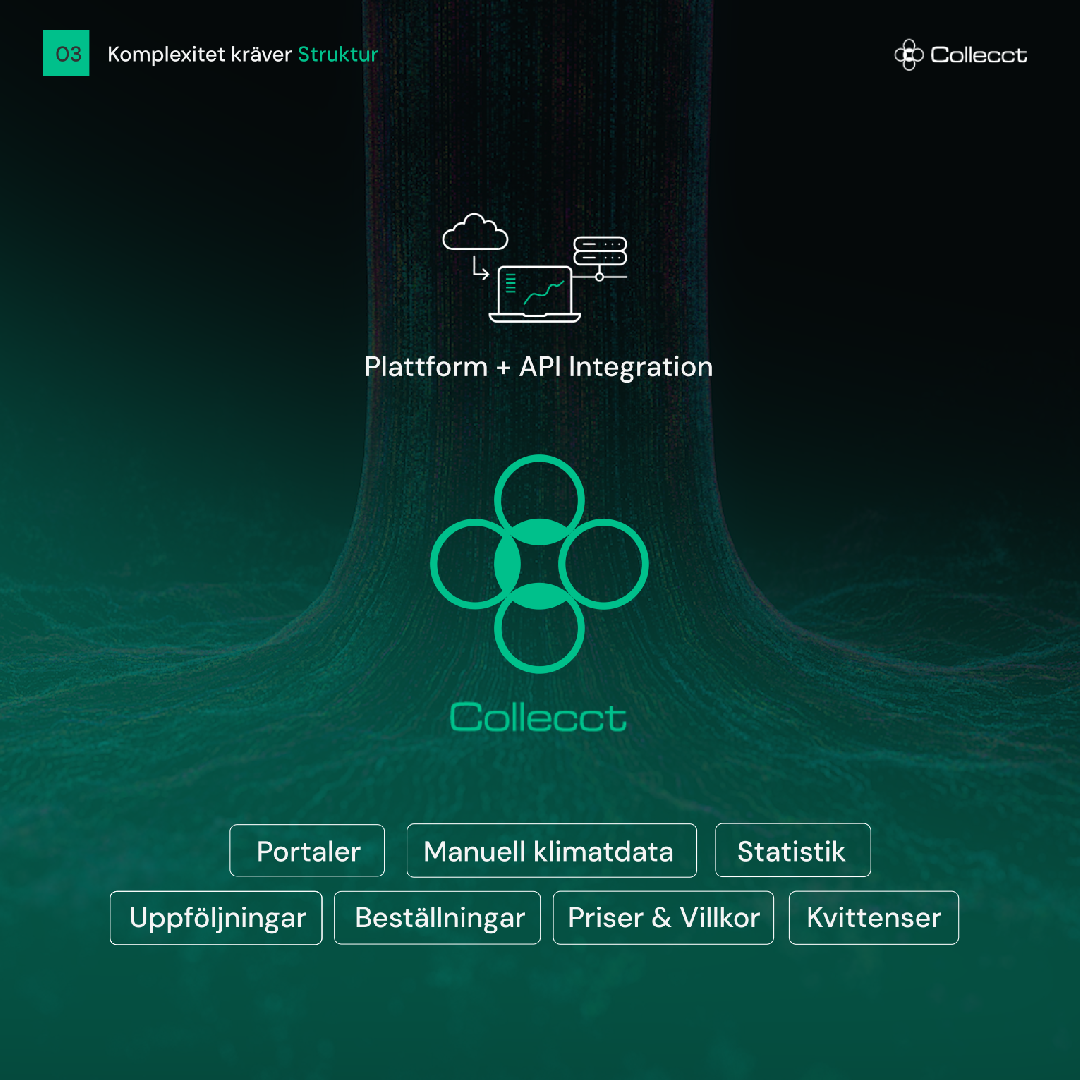
The point is clear: It's not the people who are the problem—it's the fragmented structure.
When material and waste flows become complex, it’s easy to assume that the problems stem from inadequate procedures. But often, it’s not a matter of people making mistakes. It’s a matter of a lack of structure. Orders are placed via email, phone, or various supplier portals. Prices and terms are scattered across different systems. Statistics are provided after the fact. Climate data requires manual compilation. Follow-up depends on individual people. Each part may function on its own, but the whole becomes difficult to manage.
This is a common situation in larger real estate and property management environments. There is a functioning waste management system, but not necessarily a functioning governance model for the material flow.
Collecct creates that structure. Suppliers, services, prices, material flows, and ordering processes are set up on a shared platform. Operational management takes place within a consolidated workflow where orders, status, history, and supporting documentation are traceable. This means the organization doesn’t have to start from scratch every time a new location, new waste stream, new supplier, or new solution is added. The complexity doesn’t disappear. But it becomes manageable. And above all: it becomes possible to improve.